hipstr
| Crates.io | hipstr |
| lib.rs | hipstr |
| version | 0.8.0 |
| created_at | 2023-06-01 19:45:13.512521+00 |
| updated_at | 2025-02-10 11:37:30.060645+00 |
| description | Yet another string for Rust: zero-cost borrow and slicing, inline representation for small strings, (atomic) reference counting |
| homepage | |
| repository | https://github.com/polazarus/hipstr |
| max_upload_size | |
| id | 880099 |
| size | 501,701 |
 polazarus (polazarus)
documentation
README
hipstr





Yet another string type for Rust 🦀
- no copy borrow via
borrowed(aconstconstructor) orfrom_static - no alloc small strings (23 bytes on 64-bit platform)
- no copy owned slices
- a niche:
Option<HipStr>andHipStrhave the same size - zero dependency and compatible
no_stdwithalloc
Also byte strings, OS strings, and paths!
⚡ Examples
use hipstr::HipStr;

let simple_greetings = HipStr::from_static("Hello world");
let _clone = simple_greetings.clone(); // no copy

let user = "John";
let greetings = HipStr::from(format!("Hello {}", user));
let user = greetings.slice(6..); // no copy
drop(greetings); // the slice is owned, it exists even if greetings disappear

let chars = user.chars().count(); // "inherits" `&str` methods
✏️ Features
std(default): providesHipOsStrandHipPathtypes, and more trait implementations (for comparison and conversions)serde: provides serialization/deserialization support withserdeborsh: provides serialization/deserialization support withborshbstr: provides compatibility with BurntSushi'sbstrcrateunstable: do nothing, used to reveal unstable implementation details
☣️ Safety of hipstr
This crate makes extensive use of unsafe code blocks. 🤷
It leverages the 2-bit alignment niche present in pointers across most platforms (all platforms currently supported by the Rust compiler?) to discriminate between the three possible representations.
To make things safer, Rust is tested thoroughly on multiple platforms, normally and with Miri (the MIR interpreter).
🧪 Testing and Verification Strategy
To ensure safety and reliability, this crate undergoes thorough testing:
- Near 100% test coverage
- Cross-platform validation:
- 32-bit and 64-bit architectures
- little and big endian
In addition, this crate is checked with advanced dynamic verification methods:
- Concurrency testing using the Tokio's
loomcrate - Undefined behavior detection using Miri (the MIR interpreter)
☔ Coverage
This crate has near full line coverage:
cargo llvm-cov --all-features --html
# or
cargo tarpaulin --all-features --out html --engine llvm
Check out the current coverage on Codecov:

🖥️ Cross-platform testing
In the Github-provided CI, hipstr is tested under:
- Linux
- Windows
- MacOS (ARM 64-bit LE)
You can easily run the test on various platforms with cross:
cross test --target s390x-unknown-linux-gnu         # 32-bit BE
cross test --target powerpc64-unknown-linux-gnu     # 64-bit BE
cross test --target i686-unknown-linux-gnu          # 32-bit LE
cross test --target x86_64-unknown-linux-gnu        # 64-bit LE
Note: previously I used MIPS targets for big endian, but due to some LLVM-related issue they are not working anymore… see Rust issue #113065
🧵 Loom
This crates uses the loom crate to check the custom "Arc" implementation. To
run the tests:
RUSTFLAGS='--cfg loom' cargo test --release loom
🔍 Miri
This crate runs successfully with Miri:
MIRIFLAGS='-Zmiri-symbolic-alignment-check -Zmiri-permissive-provenance' cargo +nightly miri test

for SEED in $(seq 0 10); do
  echo "Trying seed: $SEED"
  MIRIFLAGS="-Zmiri-seed=$SEED -Zmiri-permissive-provenance" cargo +nightly miri test || { echo "Failing seed: $SEED"; break; };
done
To check with different word size and endianness:
# Big endian, 64-bit
cargo +nightly miri test --target mips64-unknown-linux-gnuabi64
# Little endian, 32-bit
cargo +nightly miri test --target i686-unknown-linux-gnu
Note: this crate leverages the "exposed provenance" semantics.
MIRIFLAGS=-Zmiri-permissive-provenance silences the warning related to the use
of exposed provenance.
📦 Similar crates
#[non_exhaustive]
| Name | TS cheap-clone | Local cheap-clone | Inline | Cheap slice | Bytes | Borrow 'static |
Borrow any 'a |
Comment |
|---|---|---|---|---|---|---|---|---|
hipstr |
✓ | ✓ | ✓ | ✓ | ✓ | ✓ | ✓ | obviously! |
arcstr |
✓* | - | - | -** | - | ✓ | - | *use a custom thin Arc, **heavy slice (with dedicated substring type) |
flexstr |
✓* | ✓ | ✓ | - | - | ✓ | - | *use (A)rc<str> instead of (A)rc<String> (remove a level of indirection but use fat pointers) |
imstr |
✓ | ✓ | - | ✓ | - | - | - | |
faststr |
✓ | - | ✓ | ✓ | - | ✓ | - | zero-doc with complex API |
fast-str |
✓ | - | ✓ | ✓ | - | ✓ | - | inline repr is opt-in |
ecow |
✓* | - | ✓ | - | ✓** | ✓ | - | *on two words only 🤤, **even any T |
cowstr |
✓ | - | - | -* | - | ✓ | -** | *heavy slice, **contrary to its name |
compact_str |
- | - | ✓ | - | ✓* | - | - | *opt-in via smallvec |
inline_string |
- | - | ✓ | - | - | - | - | |
kstring |
✓ | ✓ | ✓ | - | - | ✓ | ✓* | safe mode, use boxed strings; * with second type |
smartstring |
- | - | ✓ | - | - | - | - | |
smallstr |
- | - | ✓ | - | - | - | - | |
smol_str |
- | - | ✓* | - | - | ✓ | - | *but only inline string, here for reference |
skipping specialized string types like
tinystr (ASCII-only, bounded), or
bstr, or bytestring, or...
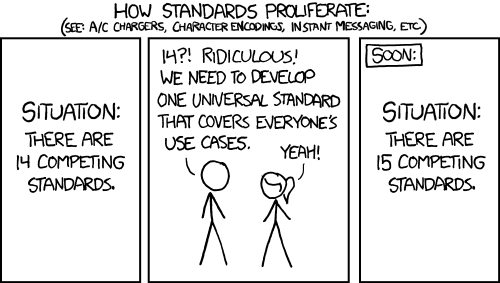
In short, HipStr, one string type to rule them all 😉
🏎️ Performances
While speed is not the main motivator for hipstr, it seems to be doing OK on that front.
See some actual benchmarks on Rust's String Rosetta.
📖 Author and licenses
For now, just me PoLazarus 👻
Help welcome! 🚨
MIT + Apache